


Quantum Computing: Because Regular Computers Weren't Giving Us Enough Existential Crises
- Adam Silva
- 6 days ago
- 3 min read

Let's be honest. Your current laptop is a bit of a drama queen. It spins that little rainbow wheel because you opened three Chrome tabs and a Spotify playlist at the same time. But at its core, it's actually a very simple, predictable creature. It thinks in bits — which are just millions of tiny light switches that can only be On (1) or Off (0).
But scientists looked at that and said, "What if, instead of a boring old light switch, our computer was a haunted disco ball spinning in a parallel universe?" Enter Quantum Computing.
What Exactly Is It? (The "Spooky" Basics)
Normal computers are like a coin sitting flat on a table. It's either heads (1) or tails (0). Safe. Comfortable. Predictable.
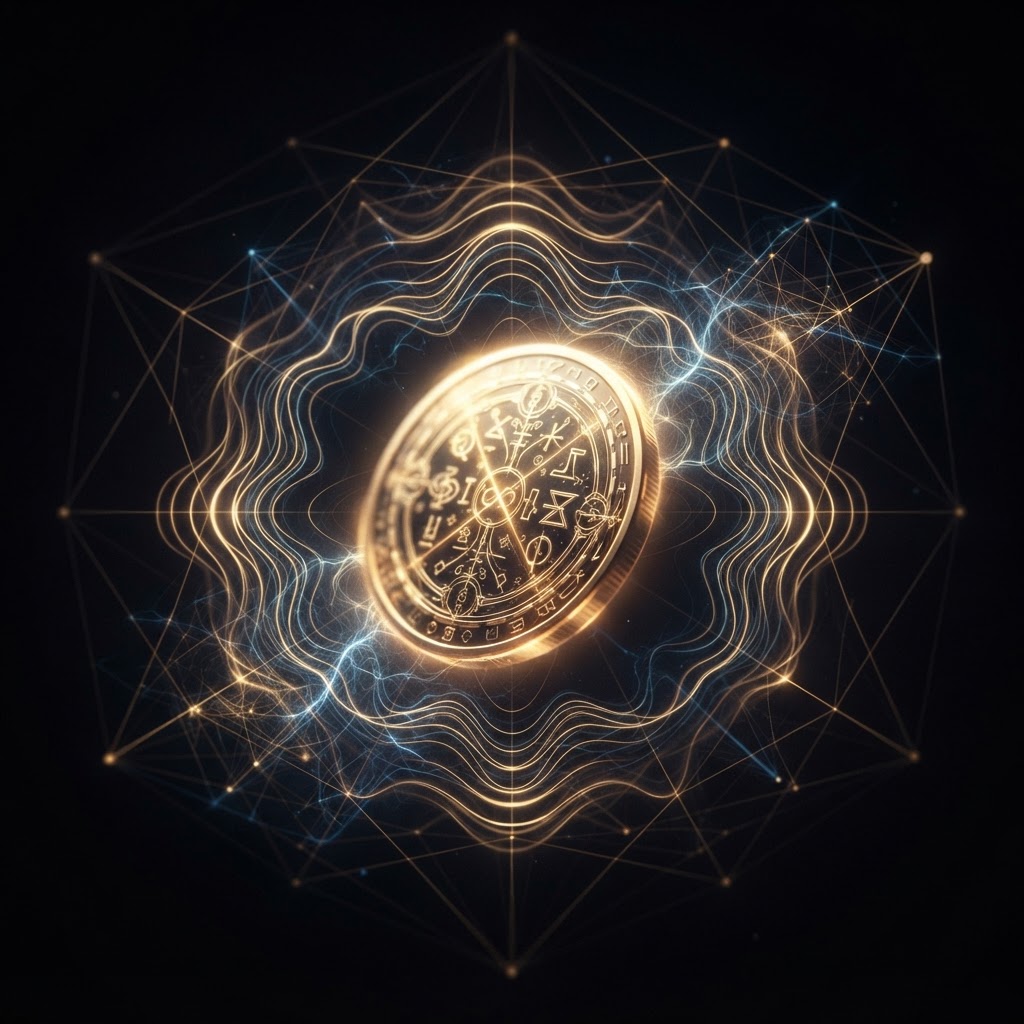
A quantum computer takes that coin and spins it. While it's spinning, is it heads or tails? It's both. It's a blurry mess of possibilities. This brings us to the two fundamental rules of the quantum club.
Superposition (The "Yes, And" of Physics)
Instead of boring old bits, quantum computers use qubits (quantum bits). Thanks to a mind-bending property called superposition, a qubit can be a 0, a 1, or any combination of both at the same exact time.
Imagine trying to find your way out of a giant maze. A regular computer tackles this like a very patient toddler: it tries one path, hits a dead end, backs up, and tries the next one. It does this one by one until it finds the exit. A quantum computer enters the maze and walks down every single path simultaneously.
Entanglement (The Cosmic Walkie-Talkie)
If superposition wasn't weird enough, qubits can become entangled. This means two qubits become deeply, cosmically linked. Whatever happens to one instantly happens to the other, even if they are on opposite sides of the universe.
"Spooky action at a distance" — Einstein's words, because it completely broke his brain. If Einstein's brain broke, it's entirely okay if yours feels a little mushy right now too.
What Does It Actually Do? (Besides Cost Billions)
Before you ask: no, a quantum computer will not run Minecraft any faster. It won't make your Netflix stream smoother. In fact, for sending an email or writing a grocery list, a quantum computer is actually worse than your phone.
They are built for massive, mind-bogglingly complex mathematical problems that would take a normal supercomputer 10,000 years to solve. Here's what they're actually going to be used for:
Designing God-Tier Materials: Want to invent a solar panel that works when it's cloudy, or a battery that charges in three seconds? Quantum computers can simulate molecules down to the individual atom to cook up entirely new materials.
Supercharging Medicine: Instead of scientists spending 10 years mixing liquids like medieval alchemists, a quantum computer can simulate the human body's reaction to a molecule in minutes. Custom cures for diseases, on the fly.
Fixing Global Logistics: Imagine mapping the most efficient delivery route for every Amazon package on Earth, factoring in traffic, weather, and rogue seagulls. Quantum computers laugh at that kind of data overload.
The Catch: They Are Total Divas
If quantum computers are so great, why isn't there one on your desk right now?
Because qubits are incredibly fragile. If the temperature changes by a fraction of a degree, or if a stray Wi-Fi signal gets too close, the qubits get confused, lose their quantum magic, and collapse back into regular boring 1s and 0s. This tragic event is called decoherence.
To keep them happy, quantum computers have to be kept inside giant upside-down golden chandeliers (actually massive refrigerators) chilled to absolute zero — colder than deep space.
So until we can pack deep-space temperatures into a sleek smartphone chassis, quantum computers will remain in high-tech labs, guarded by phalanxes of PhDs.
The Bottom Line
Quantum computing isn't just a faster version of what we have. It's an entirely new way of thinking about information. We are moving away from the rigid world of Either/Or and stepping into a bizarre, sci-fi world of Both/And.
Just don't ask it to open too many Chrome tabs. Some things are beyond even quantum physics.
Adam Silva covers the infrastructure shifts reshaping enterprise technology and agentic commerce. Adam Silva Consulting helps businesses position themselves at the leading edge of what's next.
Comments